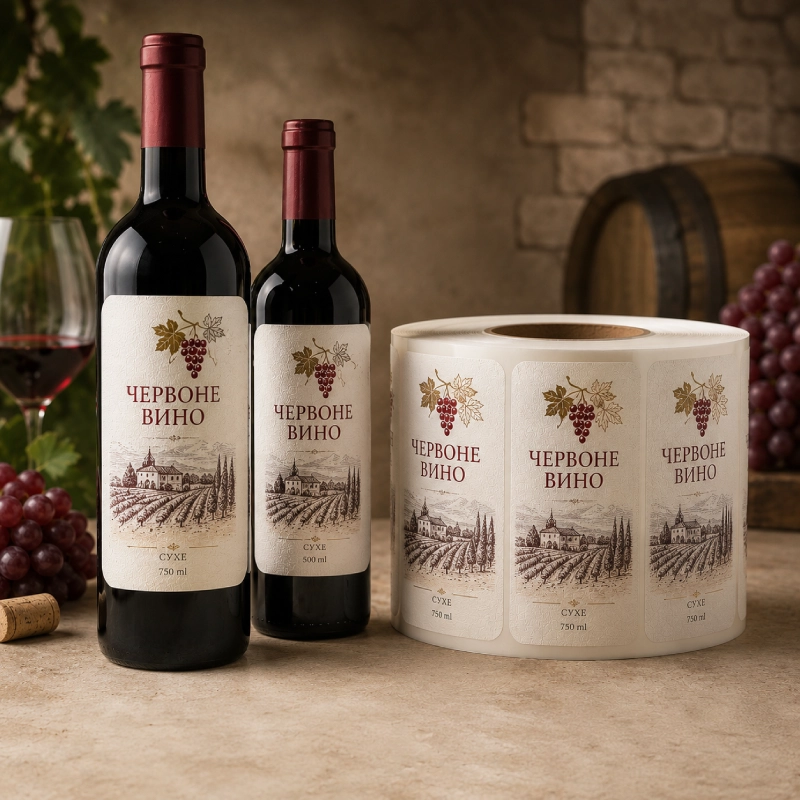
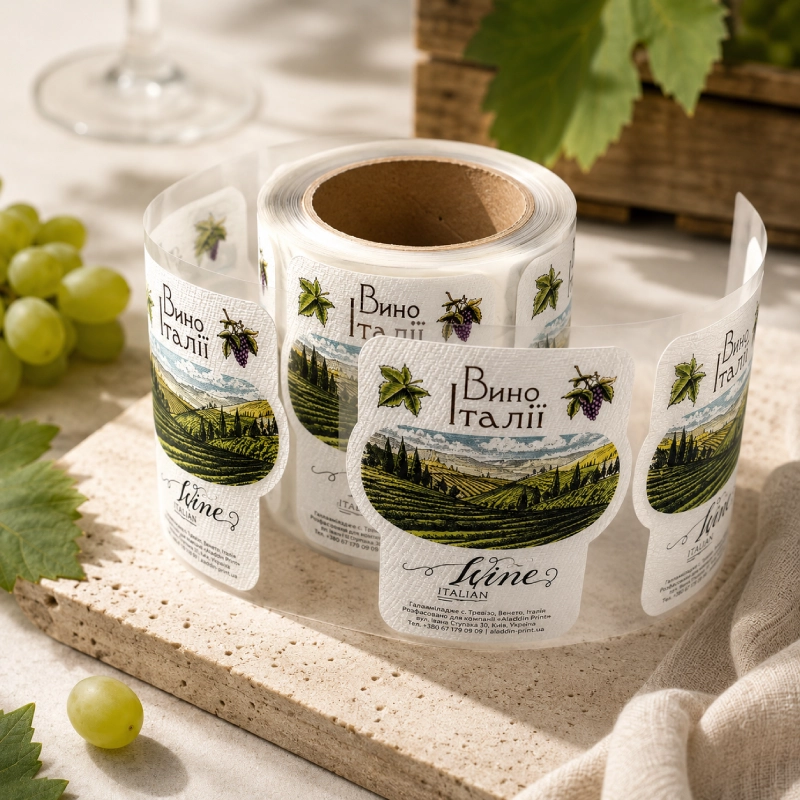
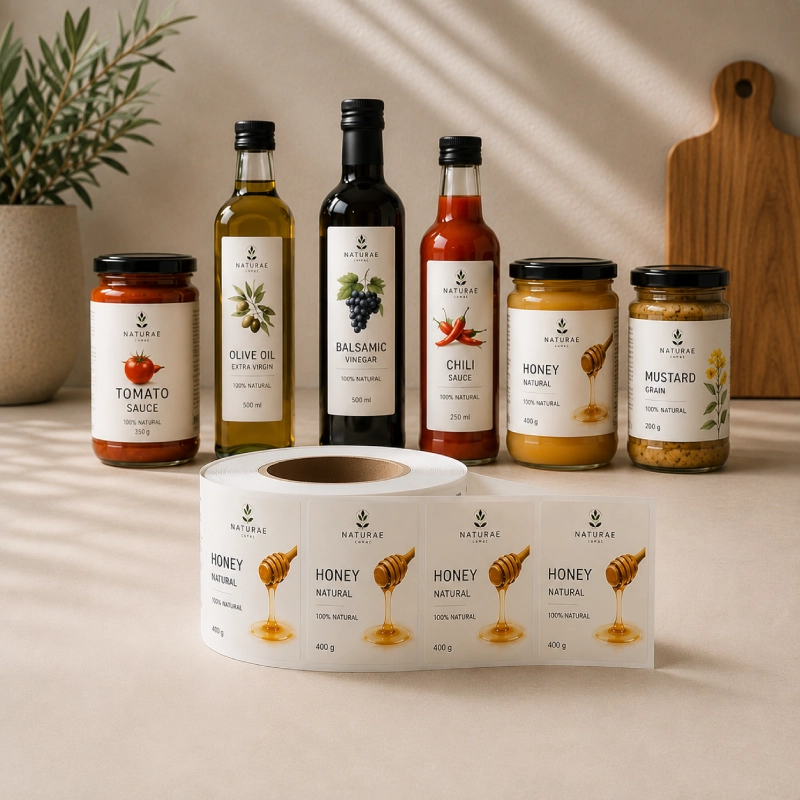
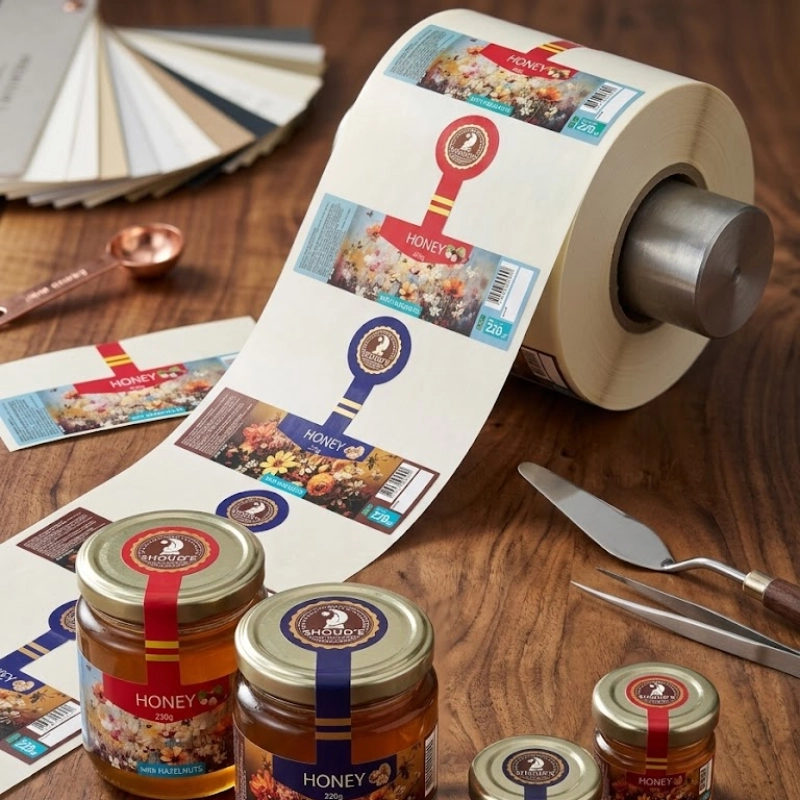
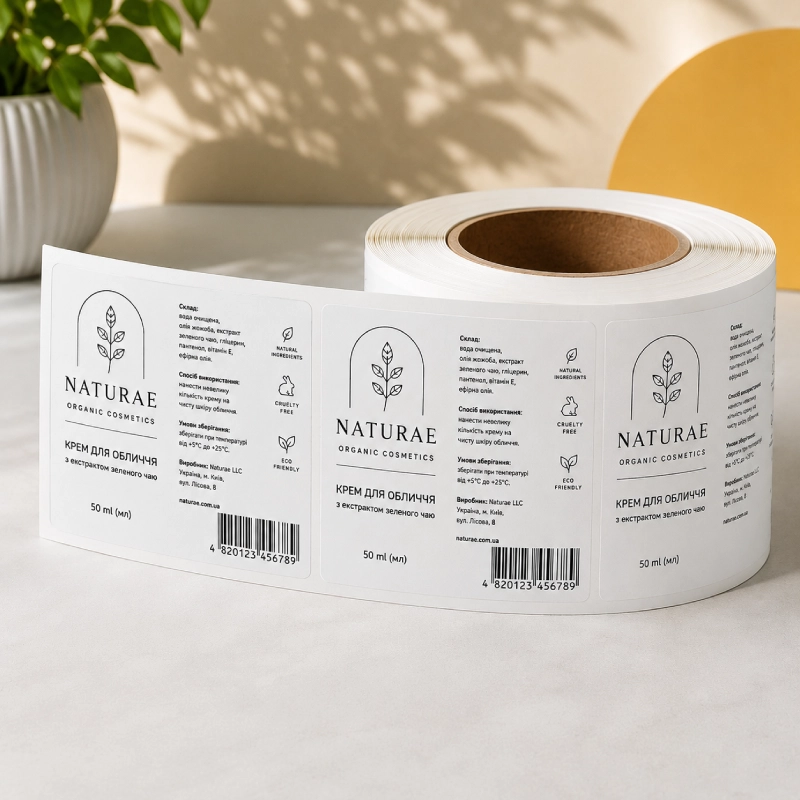
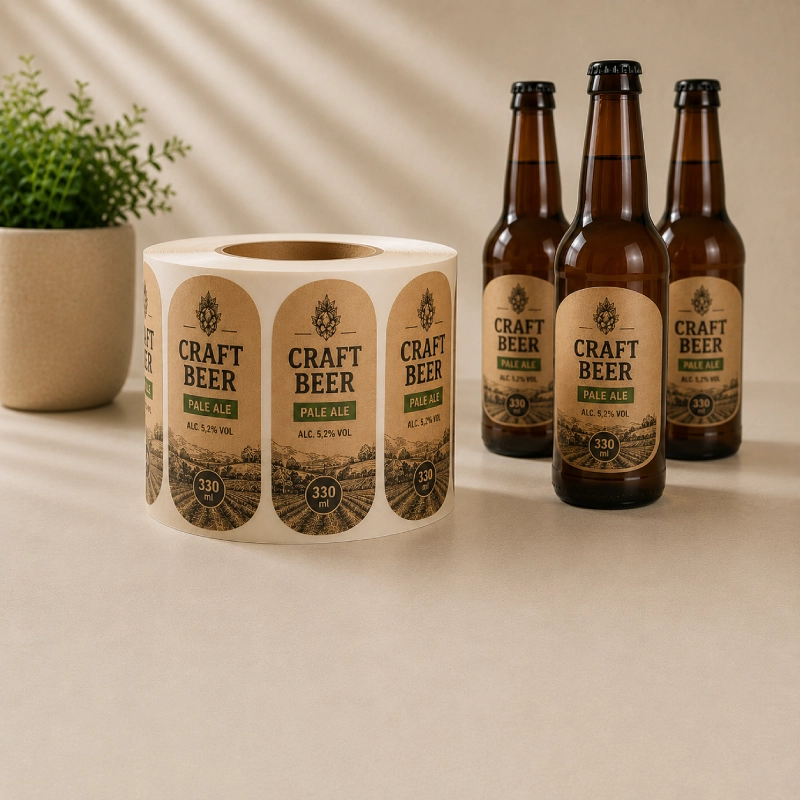
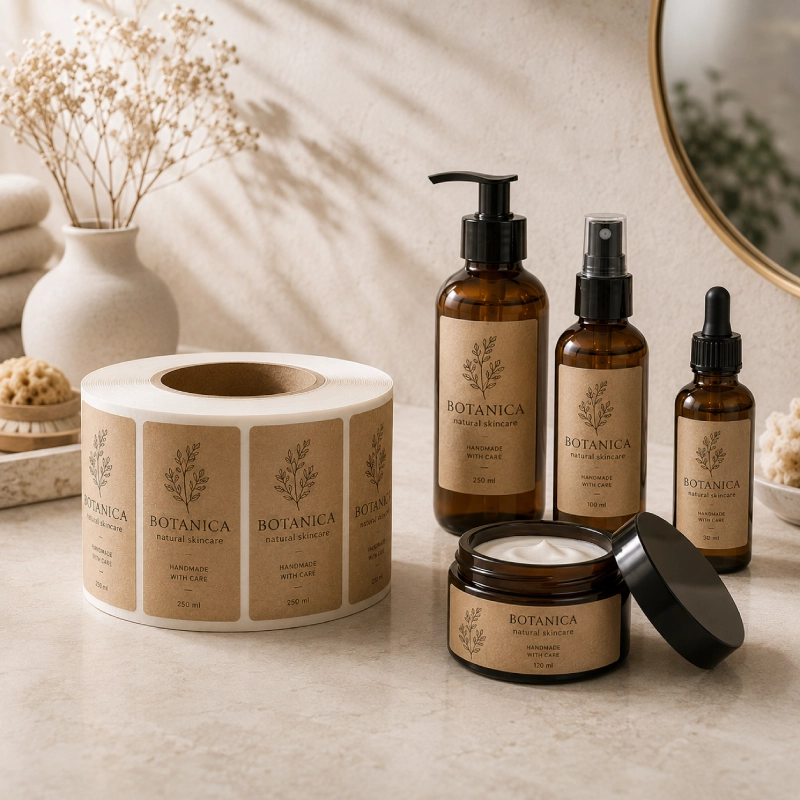
Silver foil roll labels in Kyiv are a solution when packaging needs a premium “metallic” accent while practicality is still important: resistance to moisture, abrasion, and a neat appearance after transportation. Silver metallized film is often used for products that need to compete on the shelf: it immediately attracts attention and reinforces the brand perception as modern and high-status.
Most common use cases where silver film performs best:
Silver film is a material that creates a “metallic” effect ✨ without additional coatings. It gives products a modern, premium look while providing durability and moisture resistance.
Silver metallized film combines a “wow effect” with practicality. It looks great in small design elements and boosts contrast. For many brands in Kyiv, it’s a way to make packaging look more expensive without complex finishing technologies.
Key properties:
✨ “Metallic” effect — a shiny premium appearance.
💎 Modern and high-status — ideal for brands that want to stand out.
🌧️ Moisture and abrasion resistance — labels keep their look even in tough conditions.
⏳ Durability and strength — they maintain aesthetics throughout use.
🎨 Great print results — looks excellent both in full color 🌈 and in black-and-white ⚫⚪.
On silver film you can produce both minimal designs (black/white printing) and full color. If the artwork contains light tones or you need a “clean” color unaffected by the metallized base, a white underprint (white ink under CMYK) is used. This is especially relevant for pastels, skin tones, milky shades, and whenever consistent reproduction of brand colors is required.
📏 Film thickness: 58 microns.
🧴 Adhesive: acrylic adhesive.
Post-press options:
⚠️ Important: silver film is always laminated with matte lamination to protect the print and preserve the aesthetics.
For the label to hold well and not lift at the edges, it’s important to consider real conditions: temperature, moisture, condensation, grease/oil, friction during logistics, and the surface type (glass, plastic, cardboard, film).
The roll format is convenient both for automatic application (label applicator) and for manual labeling. For applicators, these parameters matter: winding direction, label orientation, core diameter, and roll outer diameter.
Technical roll-label options:
Minimum order: printing is produced on a 30 cm web. The minimum order volume is 10 meters of roll. After printing, the web is slit into lanes of the required width for your labels.
Production lead time and delivery:
To get a fast quote and start production, send the manager a short checklist:
Before placing an order, you can visit our demo showroom in Kyiv. We keep different label materials there — you can see their texture, feel them in your hands, and choose the best option for your product.
Yes. If you have pastel/light colors or need accurate “clean” shades, a white underprint (white ink under CMYK) removes the influence of the metallized base.
Yes, but it’s best to apply to a surface that is as dry as possible. For cold+moisture conditions, we’ll recommend a solution for your container material and use case.
Standard is acrylic adhesive. For difficult surfaces (PP/PE), moisture, grease, or cold, the choice depends on the task — send a photo of the container and we’ll advise.
The minimum order is 10 meters of roll (printed on a 30 cm web, then slit to your label size).
Preferably PDF/AI: cut path, bleeds, fonts converted to outlines. If there’s a QR/barcode or fine details, send the file for preflight before printing.
Matte lamination protects the print from abrasion and moisture and keeps the label’s appearance stable during use.
You’ll need: winding direction, label orientation, core diameter (41.2 / 50.8 / 76.6 mm), and the desired roll outer diameter. If unsure, send the applicator model or a photo of a sample roll. { "@context": "https://schema.org", "@type": "FAQPage", "mainEntity": [ { "@type": "Question", "name": "Чи потрібен білий підклад на срібній плівці?", "acceptedAnswer": { "@type": "Answer", "text": "Так. Якщо є пастельні/світлі кольори або важлива точність “чистих” відтінків — білий підклад (білий під CMYK) прибирає вплив металізованої основи." } }, { "@type": "Question", "name": "Чи підходить для холодних пляшок і конденсату?", "acceptedAnswer": { "@type": "Answer", "text": "Так, але клеїти краще на максимально суху поверхню. Для умов холод+волога підберемо рішення під ваші умови та матеріал тари." } }, { "@type": "Question", "name": "Який клей краще для скла/пластику?", "acceptedAnswer": { "@type": "Answer", "text": "Стандартно використовується акриловий клей. Для складних поверхонь (PP/PE, волога, жир, холод) вибір залежить від задачі — надішліть фото тари, підкажемо оптимально." } }, { "@type": "Question", "name": "Яка мінімальна кількість/метраж?", "acceptedAnswer": { "@type": "Answer", "text": "Мінімальне замовлення — 10 метрів рулону (друк на полотні 30 см з подальшим різанням під ваш розмір етикетки)." } }, { "@type": "Question", "name": "Які вимоги до макета?", "acceptedAnswer": { "@type": "Answer", "text": "Найкраще PDF/AI: контур різу, вильоти, шрифти в кривих. Якщо є QR/штрихкод або дрібні елементи — відправте файл на перевірку перед друком." } }, { "@type": "Question", "name": "Чому срібну плівку потрібно ламінувати?", "acceptedAnswer": { "@type": "Answer", "text": "Матова ламінація захищає друк від стирання та вологи й стабілізує зовнішній вигляд етикетки під час використання." } }, { "@type": "Question", "name": "Які параметри намотки потрібні для аплікатора?", "acceptedAnswer": { "@type": "Answer", "text": "Потрібні: напрям намотки, орієнтація етикетки, діаметр втулки (41,2 / 50,8 / 76,6 мм) і бажаний зовнішній діаметр рулону. Якщо не впевнені — надішліть модель аплікатора або фото зразка рулону." } } ] }
[order_block_kyiv]
To let us know you're not a robot, please provide the following answer: Завантаження...
Select turnaround timeStandard (3–5 days)Rush (1–2 days)
To make sure you’re not a robot, please provide an answer: Loading...